BC Salmon Fishing Season: Peak Run Timing, Coastal Ports, and Weather Planning
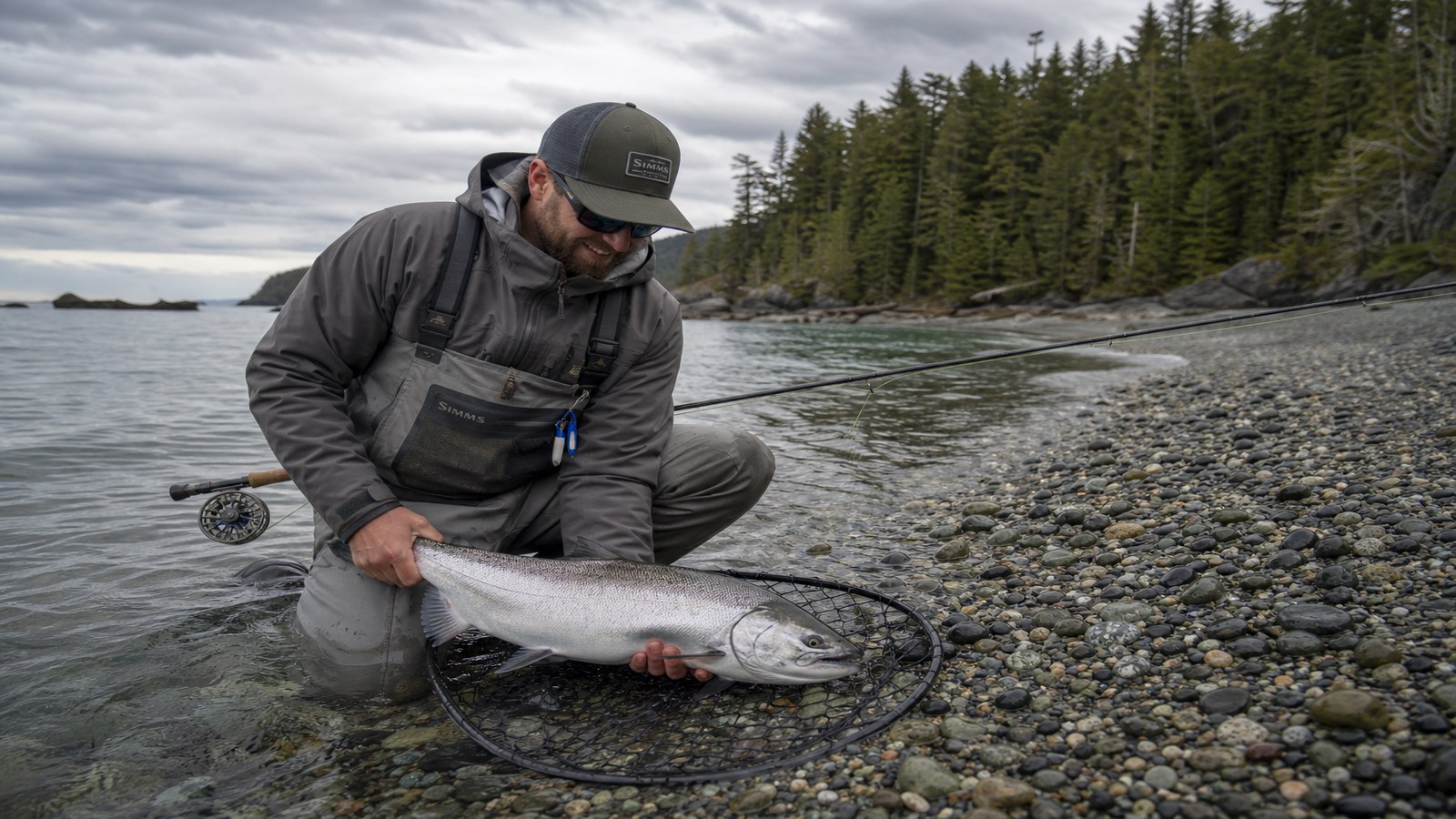
British Columbia holds an international reputation for world-class sport angling, but successful trips depend entirely on understanding the bc salmon fishing season. Spanning hundreds of tidal islands, remote coastal fjords, and massive river systems from the United States border up to Alaska, British Columbia offers year-round salmon fishing opportunities. However, different salmon species arrive in specific peak feeding windows that dictate when you should book your lodge or charter.
Month-by-Month Breakdown of the BC Salmon Fishing Season
Here is how the fishing calendar unfolds across coastal British Columbia:
May to June: Early Spring Chinook and Feeder Kings
The open-water season begins along outer coastal islands as feeding Chinook intercept herring migrations:
- Northern BC and Haida Gwaii: Luxury floating lodges open their doors in late May as massive schools of mature Chinook arrive at Langara Island and Cape Knox. Anglers enjoy uncrowded waters and active mooching bites.
- Vancouver Island: Campbell River, Victoria, and Port Hardy see steady action for spring Chinook along tidal contours and submerged reef structures.
July to August: Peak Prime Season Coast-Wide
July and August represent the crown jewel of the bc salmon fishing season. Weather is generally calm, daylight extends past 9:00 PM, and all five Pacific salmon species are present in high numbers:
- Chinook Salmon: Massive mature kings (including 30-plus-pound Tyee salmon) cruise coastal sounds and island bottlenecks like Discovery Passage and Nootka Sound.
- Coho Salmon: Fast-growing silver salmon school in upper water layers, striking fast-trolled spoons and flies with acrobatic leaps.
- Sockeye and Pink Salmon: Massive river-bound runs travel through coastal channels, providing fast action on light tackle.
September to October: Monster Northern Coho and River Runs
Autumn brings the dramatic shift toward freshwater river angling and giant saltwater coho:
- Saltwater Northern Coho: Coastal waters produce "hooknose" coho exceeding 15 to 20 pounds, feeding aggressively ahead of their river entry.
- River Migrations: Coastal rivers like the Fraser, Stamp, Squamish, and Skeena reach fever pitch. Float anglers, jet-boat charters, and Spey-casting fly fishermen target coho, chum, and fall Chinook in clear river pools.
November to April: Winter Chinook in Sheltered Waters
While northern lodges close for winter, dedicated anglers fish sheltered southern waters for winter Chinook (feeder springs). Gulf Islands, Howe Sound, and Oak Bay near Victoria offer calm, crisp winter days trolling deep bait balls for hard-fighting 8 to 15-pound salmon.
Saltwater and Freshwater Gear Strategy for the Season
Adapting your gear to the specific stage of the BC salmon calendar ensures peak performance:
- Early Saltwater Mooching: Single-action mooching reels spooled with 25-pound monofilament paired with 10-foot-6 flexible rods provide the sensitivity needed to feel subtle herring bites in May and June.
- Summer Downrigger Trolling: Medium-heavy downrigger rods spooled with 40 to 50-pound braid, pulling Gibbs Delta flashers and 3.5-inch spoons along 60 to 120-foot contour lines.
- Autumn River Outfits: 8-weight to 9-weight fly rods with Skagit sink tips or 11-foot centerpin float rods for drifting cured salmon roe and marabou jigs through heavy river runs.
Understanding Tidal Currents and Feeding Bites
In coastal British Columbia, tidal movement dictates fish feeding behavior. Massive tidal exchanges push millions of gallons of water through island bottlenecks like Discovery Passage and Seymour Narrows. Feeding Chinook and coho position themselves on the down-current side of underwater points, ambushing schools of disoriented herring swept past in the current. Planning your daily fishing runs around slack-water periods yields the most productive bite windows of the day.
Conservation Guidelines and Salmon Stamps
Anglers participating in the British Columbia salmon season must observe strict regional quotas and conservation rules. Wild coho and wild Chinook often carry seasonal non-retention rules in specific management zones, while hatchery-clipped fish (identifiable by a missing adipose fin) can be kept up to daily limits. Always review current DFO fishery notices before heading out on the water.
Weather Planning and Packing for British Columbia
The Pacific Northwest marine climate demands sensible preparation across all seasons:
- Layered Outerwear: Coastal mornings are cool and damp even in August. Wear moisture-wicking base layers, a fleece mid-layer, and high-grade waterproof jackets and bibs.
- Footwear: Non-slip deck boots with rubber soles keep your feet warm and dry on wet fiberglass or aluminum boat decks.
- Sun and Eye Protection: Polarized sunglasses reduce glare off the water, helping you spot bait balls and kelp beds, while sunscreen protects against high UV reflection on open water.
Booking Ahead for Prime Dates on Castaway
Because peak summer weeks represent high-demand biological windows, premier fishing lodges and top-rated charter boats often fill their calendars months in advance. Booking through Castaway gives you direct access to verified skippers with transparent pricing and real guest reviews.
Coastal ports fish to different calendars and the weather writes the rest. Book a BC guide on Castaway who plans around the week you can actually travel.